
Prediction: We'll see a bump in unsubscribes with this one.
Why? Because this issue of Mindfalls deals with the dreaded S-word. We're going to talk frankly, from experience, about what suicidality is and isn't, what helps, and what doesn't. Some readers will turn away in the mistaken idea that talking about suicide only encourages it. We're trusting, though, that most of you will lean in, spread the word, and help us drive out darkness with curiosity, openness, and understanding.
No need for more preamble, except to say that the fish title comes from Allie Brosh's Hyperbole and a Half webcomic—specifically from her "Depression Part Two" post of May 2013, which is, imo, one of the most brilliant (and funny) things ever to be placed on the internet.
Action: Forward this email to someone you know who has reason to think about mental health and illness. You'll be helping.


We wrote this op-ed for World Suicide Prevention Day 2025. It takes issue with the standard line on suicide, which is perhaps why no mainstream media outlet picked it up. We stand by our advice. Please feel free to share it widely.
Kindness Won’t Prevent Suicide. This Might.
by Jocelyn Davis and Kelly Kinnebrew
Whatever our country has been doing to lessen rates of suicide, it doesn’t seem to be working. The CDC reports that over the past quarter-century, suicide rates increased 37 percent. In 2024, they climbed from 14.2 to 14.7 per 100,000 people. Youth suicide attempts are rising sharply.
We want policymakers to know that a fundamental misunderstanding of suicide is weakening prevention efforts. Put simply: Suicidality isn’t cured by kindness. It’s cured by restoring a sense of agency.
We are two women with fulfilling lives and successful careers—one a psychologist, one an author of leadership and mental health books—who went through months-long episodes of depression or anxiety severe enough to cause suicidal ideation. We know what helped us recover and what didn’t. This past summer and fall, as part of our research for a forthcoming book about mental breakdowns in high-functioning professionals, we interviewed 24 individuals who navigated one or more serious mental collapses. About 40 percent of our interviewees thought seriously about suicide; a few planned how they might do it; one made an actual attempt.
Most people see suicidality as a death wish fueled by dark emotions. Brighten the emotions, they think, and the wish will disappear. Show the unhappy person they are loved or that their problems aren’t so bad, and they’ll stop wanting to die. In a suicide’s aftermath, survivors imagine scenarios in which they “reached out” to the deceased in a caring way. “If only he’d felt he had a home!” said one tearful guest at a memorial service for a friend. More empathy from others, she assumed, would have raised her friend’s spirits and kept him alive.


Jocelyn Davis writes books about leadership, history, literature, and mental health. Learn more at JocelynRDavis.com.

Planning Is Not a Plan
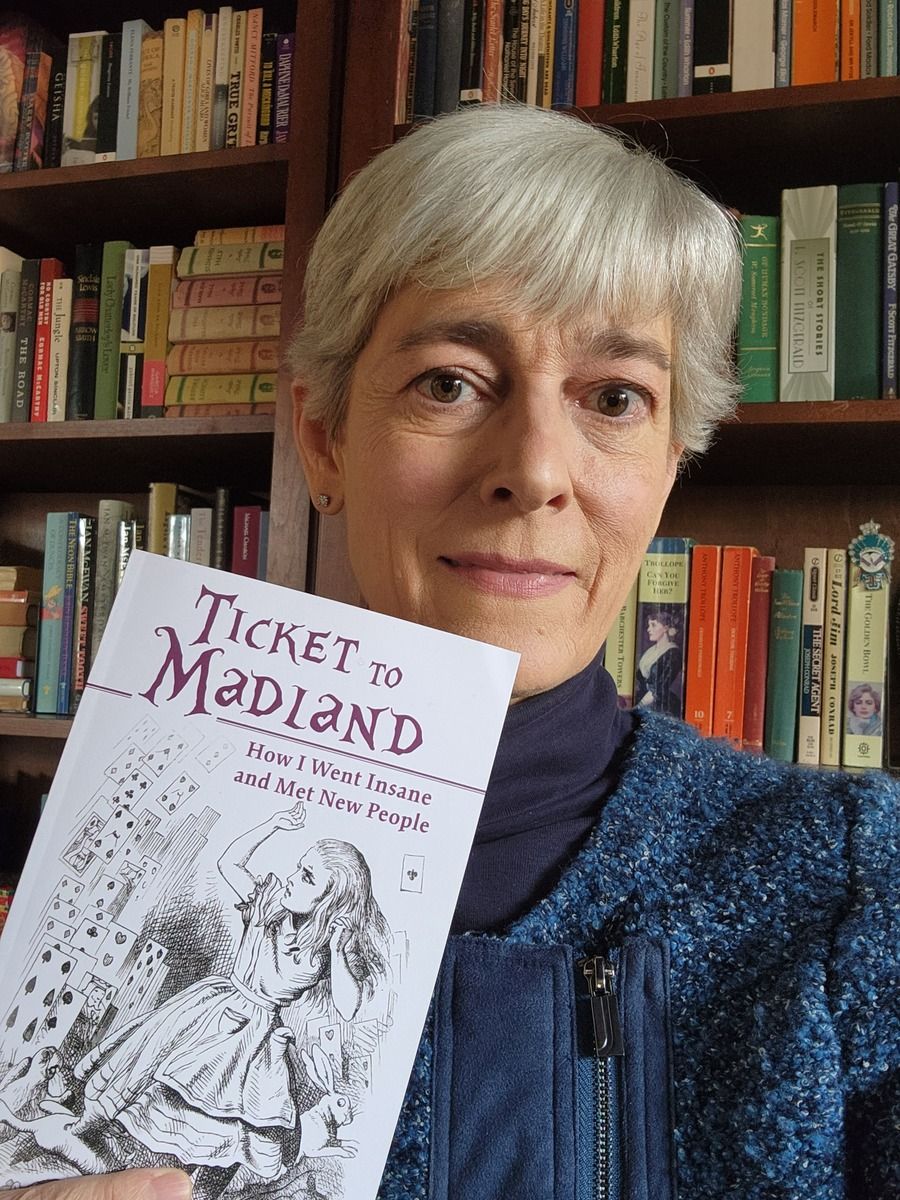
Ticket to Madland is the true story of a mysterious mind-body illness that struck me in the summer of 2020, making me first irritated, then discombobulated, then desperate, then suicidal. Eventually, I made a full recovery.
This excerpt takes place at the nadir of the whole journey: October 31, a few days before I went to the hospital. (The fortnight in the psych ward was, in comparison, a pleasant getaway.) It may be a little tough to read; note, however, that my guardian angel, whom I call Sane Me, never quit watching over me. –Jocelyn Davis
… Your body is breaking down, Sane Me observes mildly as I lock the kitchen door, make my way down the gravel driveway under the halogen glow of the streetlight, and turn left on Granada. Soon you won’t have the strength to walk at all, and then what will you do?
I turn right on Booth Street in order to visit one of my trees.
Trees are a major focus these days. Hanging, I have decided, is the only feasible way to go, and what’s needed for hanging (I reason) is a tree with a branch low enough to throw a rope around while I stand on a chair or fence or wall, but high enough (obviously) so my feet don’t touch the ground after I drop. It’s surprising how many trees are not suited to the purpose—almost as if God has designed trees, most of them anyway, to be suicide-proof. Kind of frustrating, to be honest. Nevertheless, there are four or five trees in the neighborhood that might do; this aspen-like one on Booth Street is especially promising, though it lacks a well-placed wall so will require me to bring a chair, which might be difficult, then again it’s only a block from home, it won’t be hard to carry over a small chair, or maybe the stepladder, plus the property on which the tree sits is an apartment complex, not a single-family home, which is good because I don’t want to inconvenience a homeowner, but of course people will be inconvenienced, imagine looking out your window with your morning coffee and seeing a dead body hanging in a tree and you have no idea who it is and you have to call the police and it’s a whole big thing, how rude is that? And how will they know whom to contact? I will have to write a note with contact info, put it in my coat pocket, I’ll do that when I get back … I wonder if anyone’s looking at me right now, as I stand here on the sidewalk looking up at this perfectly nice innocent tree, this must be like the thirtieth time I’ve done this, stand and stare at a tree, surely one of the neighbors has seen me and knows what I’m thinking, how embarrassing! I should just do the deed at home, but no, no, can you imagine, Matt will be devastated if I do it at home, poor guy, and anyway I’ve looked everywhere at home and there’s no place that’s any good except for the iron fence above the outside stairwell down to the basement, there’s a nice drop there, but that rose bush is in the way, stupid thorny rose bush, never liked it. No, it has to be a tree. Still, when I get home maybe I’ll have another look round the house and yard. For now, I’ll keep walking. Keep going, go, go, here it takes all the running you can do to keep in one place, said the Red Queen. Turn left on Don Gaspar. There’s another tree in this block, maybe two, that’re worth assessment. This one, for instance, this one here has a good stone wall right next to it, let’s climb up on the wall, must be careful in the semi-darkness, though … up we go … easy, now, hold onto the bark … let’s take a closer look at this big branch, see if it’ll work. Hmm. Maybe.


The article reports on a new study showing that health care systems that adopt the “Zero Suicide Model” see reductions in suicides and suicide attempts. The model, first developed at Henry Ford Health in Detroit, involves routine screening for suicide risk, safety planning, reducing access to lethal means (like firearms), and ensuring follow-up mental health care. When this approach was implemented across several health systems (such as Kaiser Permanente locations), suicides and attempts fell in most of them, in some cases by up to about 25%. This suggests that systematic, evidence-based practices within health care settings can make a measurable difference in preventing suicide.
At a major suicide prevention event in Chennai, India, officials stressed making suicide prevention a national priority with expanded helplines, school and workplace counseling, and stigma reduction. The remarks also underscored a shift toward public health–centered prevention approaches.
Community members in Wisconsin are being invited to free trainings to help people recognize warning signs of suicide and intervene early, with special focus on farmers, first responders, and veterans. These sessions use evidence-based tools like QPR and CALM to equip anyone to respond effectively to a crisis.
An article focused on suicide in older adults highlighted rising suicide rates among Americans 65 and older, based on provisional CDC data. It discusses risk factors and emphasizes the importance of awareness, screening, and support systems for older populations at elevated risk.

For this issue, I dipped into several dozen how-to-prevent-suicide talks on YouTube (so you don't have to). Below are the best six. These speakers' insights are enlightening, their advice is sound, and they do not mince words. Click past the trigger warnings with confidence; you will feel better informed and maybe even uplifted.
As a general observation, the most helpful content on this topic comes from suicide survivors themselves and from practicing psychotherapists. I don't recommend the talks by surviving family members; most have difficulty seeing past their own grief, shame, and blame. I'd also steer clear of "young journalist breathlessly interviews eminent Dr. So-and-So of Brand-name University." Abstract thinking and big egos, in this case, are a particularly bad combo.
A suicide survivor shares her story of recovery from severe, recurrent depression with hospitalization. "As individuals and as a society, we need to grasp the nettle."
A survivor of chronic suicidal ideation shares crucial ways for laypeople to help. "The best medicine for suicidal ideation is talk." (No, he's not anti-meds, just pro-openness.)
Wow, this one resonated. "A perfect-seeming life can serve as camouflage," says Dr. Rutherford. She places pain at the core of suicide--pain that is often skillfully disguised.
This guy is a little syrupy-sweet, but his three I's model for understanding suicidality is spot on. "If you can just change one of the I's, that may be enough."
This is a long one with a controversial but important message. Dr. K asks, "What do we do when suicidality is the result of SLS (shit life syndrome), not mental illness?" To skip the preamble, start at the 20-min mark.
My favorite. Dr. Truitt explains the neurology of suicide along with a counterintuitive yet profound truth: "Suicidal ideation is the brain's way of trying to keep this biological entity alive." (See this week's book excerpt for my own take on this unusual idea.)
The Mindfalls newsletter is for informational purposes and is not a substitute for professional help. If you are having a mental health crisis, call or text the 988 Suicide & Crisis Lifeline, reach out to your doctor, or go to the nearest emergency room.