
Psychotherapy: It's the milk of our 21st-century social-emotional life. Available everywhere, it mixes well. It's good and good for you. If you find one kind indigestible, take your pick from a wide array: skim, oat, goat, almond, soy, protein-fortified, probiotic, 2 percent, or chocolate. If you don't have some, you surely need some ... so go get some.
Abigail Shrier's Bad Therapy is the best-known of a recent flurry of books and articles on the downsides of therapy--or really of therapy culture, since everyone agrees that most therapists, regarded individually, are kind, competent professionals who truly want to help their clients. That may be, says Shrier, but a society that treats therapy like milk for the soul is bad for everyone, and especially bad for kids. Responses to the book range from scathing to curious to supportive.
We think Shrier is onto something, but not the thing she thinks. It's not that therapy or even therapy culture is bad; it's that we are looking at therapy and therapists the wrong way.
When people are struggling mentally, they often assume "therapy" is a magic milkshake that will nourish, heal, and save them--or, taking Shrier's view, a poisonous potion that will render them sicker and lead them astray. In fact, therapies (plural) are screwdrivers. No, not the vodka-and-OJ kind; the kind that sits in a toolbox. There are many kinds of screwdrivers, and they have their uses in fixing or mitigating certain common household problems. You'll grab one when you need it. What you won't do, one hopes, is cling to it like a mother's breast.
OK, the metaphors are getting weird! Suffice to say, this issue of Mindfalls is about therapy: now that we've got it, let's put it in its place.


by Jocelyn Davis
The Three People You Need on Your Breakdown Team
… and why “therapist” isn’t one of them
“Do you know about relaxing your shoulders?” asked Natalie, my assigned therapist at the Life Healing Center. She demonstrated smilingly, pressing fingertips to clavicles and letting out her breath with a whoof.
I assured her I did know and gave my own mini-demonstration: Smile. Drop shoulders. Whoof. It was mid-October 2020, the eleventh week of my mind-body catastrophe, and I’d grown used to answering nice counselors’ stupid questions.
Got Therapy?
During this slow-rolling breakdown, I’d encountered many conflicting perspectives on my problems and their possible solutions, but everyone I saw, professional or non, agreed on one thing: therapy was required. At the Life Healing Center, a now-closed facility where I spent five days descending to a new health low, therapy was pushed at every turn: talk therapy, group therapy, horse therapy, art therapy, meditative therapy, eye-movement therapy. In the psych ward of my local hospital, where I was confined for a couple of weeks, twice-daily “Group” was required; if you were napping, a nurse would shake you awake and insist you take part. When I was discharged (yes, I recovered, no thanks to Group), I had to give the name of my therapist and promise to make an appointment.


Jocelyn Davis writes books about leadership, history, literature, and mental health. Learn more at JocelynRDavis.com.

Everyone Loves Horse Therapy
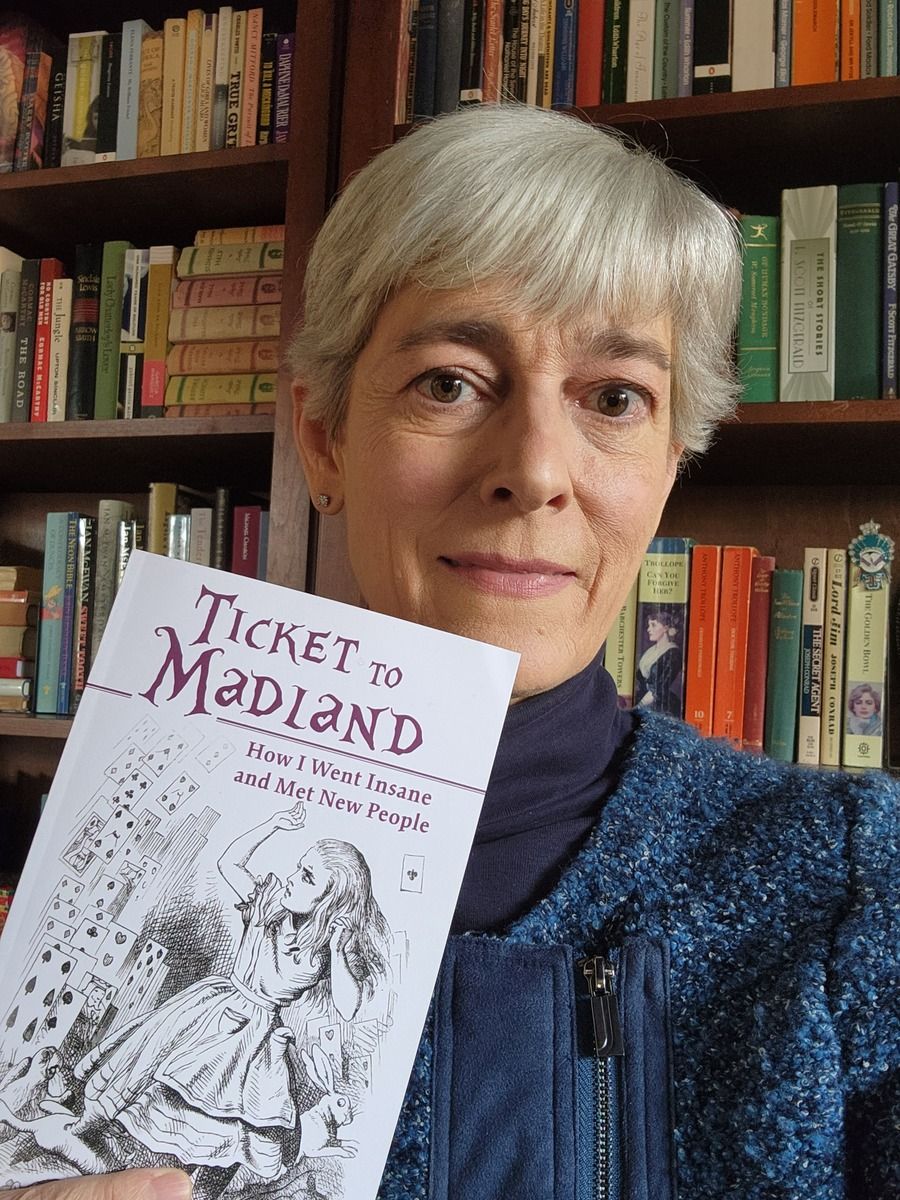
Ticket to Madland is the true story of a mysterious mind-body illness that took me to multiple doctors and therapists, a rehab center, and finally a locked psych ward. (Spoiler: I recovered.)
In this excerpt, I recount a few of my experiences at the rehab center, where I was supposed to stay for a month. I left after five days. You could say I didn’t give the place a real chance, but honestly, I knew at first sight it wasn’t going to help me. For a couple of our interviewees, however, a similar sort of center was the key to recovery, which just goes to show … different spaces for different (head) cases. –Jocelyn Davis
After lunch. The early afternoon was taken up with a visit to my assigned therapist, Natalie, who wore a broomstick skirt and a pleasantly neutral expression. We sat in chairs placed six feet apart in a meeting room on the second floor of Harmony. I gave my account: vertigo, insomnia, anxiety, nerve pain, and so on and so forth. Natalie listened empathetically. She explained that I would have group therapy on Tuesdays, Thursdays, and Saturdays, and one-on-one therapy on Wednesdays and Fridays, but not this Friday, since I was officially in quarantine.
“That’s all the one-on-ones?” I asked, disappointed. I had assumed they would be daily.
“You can request extra sessions, and I’ll do them if there’s time. We like to emphasize the group therapy, though.”
“Ah. I see.” Listen, maybe group therapy will be good. Don’t pre-judge.
Of all the things Natalie said, I recall just two. First, she asked me if I knew about “relaxing your shoulders,” prompting a small fit of internal hysteria as I thought about replying, No I know nothing about relaxing my shoulders, but I do know all about deep breathing. Second, she described the “adjunct therapies” on offer from outside specialists. One was a thing called EMDR, which stands for eye movement desensitization and reprocessing. “It’s good for trauma,” she said. “Many people find it helpful.”
“OK … I mean, I guess I am traumatized. Sure, why not.”
“And we also offer horse therapy.”
“Oh, wow! Can you actually ride the horses?”
“Well, no, but you lead them around. It’s all about body language and trust. And leading.”
“Oh.”
“It’s very popular. Only five clients per session. Would you like to do it?”
“Yes, please.”


Have We Taken Therapy Culture Too Far?
Mental‑health language and therapy culture, especially on social media, are shaping the way many young people see themselves, sometimes to the point where a diagnosis becomes central to their identity. Guests, including Laura Delano and Jo‑Ann Finkelstein, discuss both the benefits of openly talking about mental health and the risks of medicalizing normal human experiences and reducing people to clinical labels.
The Big Issue: The Truth About Harm in Therapy
The article examines how therapy can inadvertently harm clients, challenging sensational headlines and highlighting that damage isn’t only about extreme misconduct. Through client stories and expert commentary, it explains that harm often arises from subtle problems such as blurred boundaries, miscommunication, lack of cultural attunement, or therapists’ gaps in competence. While formal complaints are relatively rare, research suggests negative effects may be underreported, and the profession must better understand and define what harm looks like.
New Year, New Excuses: How Therapy-Speak Sabotages January Resolutions
The article, written by psychotherapist Jonathan Alpert, argues that the widespread use of therapy‑speak in everyday conversation can undermine personal accountability and contribute to the failure of New Year’s resolutions. He observes that many people know what changes they want to make, like improving health or habits, but increasingly use psychological language (e.g., calling setbacks “trauma,” “burnout,” or “toxic”) to justify why they didn’t follow through.

Article: Plenty of People Could Quit Therapy Right Now. Psychiatrist Richard Friedman explains why therapy should not be a lifelong project and how to know when it's time to quit.
Podcast interview: How America Became Addicted to Therapy. Richard Friedman offers more insights into our therapy culture in this interview with Hanna Rosin of The Atlantic. I found the "physical therapy vs going to the gym" analogy especially helpful.
Book: This Book Is Cheaper than Therapy. One of the most accessible DIY therapy books. From the reviews: "As the need and demand for therapy grows, Liz Kelly’s new book can be a godsend to those who need help right now! Great personal advice laced with humor and authenticity from a down-to-earth therapist. She makes the complexities of therapy easy to understand and apply."
Video: Why Therapy Doesn't Work for Mentally Ill People. In researching this edition of Mindfalls, I dipped into many, many YouTube videos with titles like "Six Ways to Recognize a Bad Therapist" and "Can You Have Too Much Therapy?" While I'm sure we could all use a sharper spidey sense for unhelpful psychologizing, this video from Dr. Scott Eilers is the only one I found that addresses (what I see as) the most important question: When it comes to treating specific mental illness, as opposed to improving general mental health, does talk therapy work? Dr. Eilers' answer: Mostly, no—but that's not because it never works. This one is definitely worth 10 minutes of your time.
The Mindfalls newsletter is for informational purposes and is not a substitute for professional help. If you are having a mental health crisis, call or text the 988 Suicide & Crisis Lifeline, reach out to your doctor, or go to the nearest emergency room.